
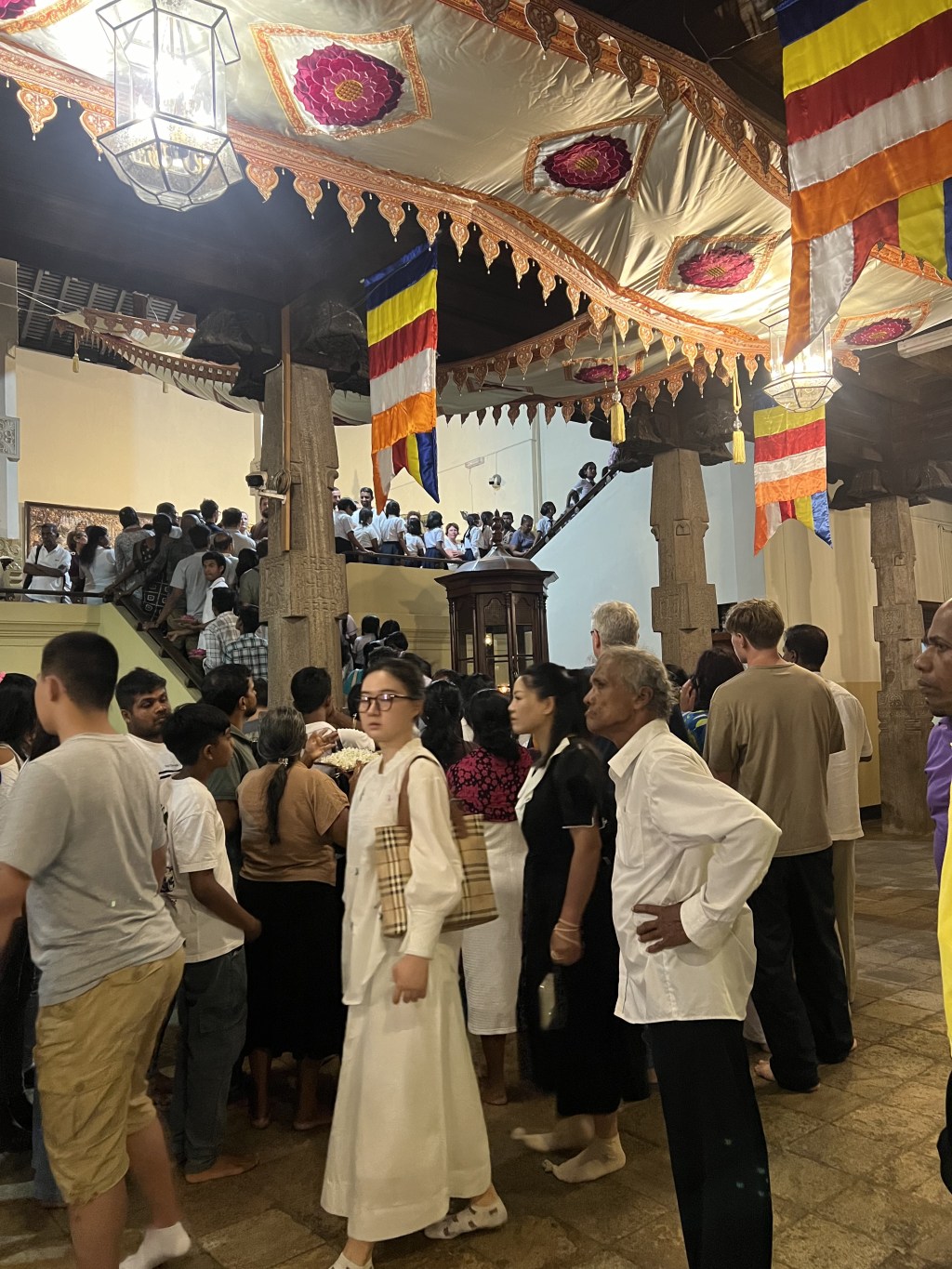
Throughout millennia of human culture and up to the present, people return again and again to the physical remains of those who embodied something greater than themselves. For Buddhists, venerating the relics of the Buddha and the Arahants is a reminder that all created things—even the bodies of those who achieved what so few can—are impermanent, subject to death and decay. And yet, the Buddhist community has preserved these fragments of form for thousands of years. Their preservation is a testament to the adamantine strength of the Sangha and the timelessness of the Dharma that invites you to come and see.
What Are Buddhist Relics?
Buddhist relics — known in Sanskrit as śarīra — are the physical remains of the Buddha or of highly realized practitioners, typically recovered after cremation. They most commonly appear as small crystalline or bone fragments, though larger relics such as teeth, finger bones, and skull fragments are among the most revered in the tradition.
The Buddha’s relics are venerated as one of the most exalted and precious sacred objects in Buddhism, symbolizing the Buddha’s boundless compassion, wisdom, and pure virtues. Buddhist disciples regard the relics as the “Living Buddha Treasure” – not only as a tangible sign of the Buddha’s true presence in the world, but also as a profound inspiration for sentient beings to cultivate goodness, accumulate merit, and diligently practice the Dharma.
Offering and paying homage to the Buddha’s relics is believed to bring about the elimination of calamities, the bestowal of blessings, and the increase of merit and wisdom. Furthermore, the fact that the relics remain indestructible for thousands of years is seen as a manifestation of the Buddha’s Dharma body being ever-present, uncreated and imperishable, inspiring people to purify their body and mind and to strengthen their faith. In brief, the Buddha’s relics carry the following significant meanings:
Religious Faith and Auspicious Wonders – In the Buddhist tradition, the relics are often accompanied by various auspicious and wondrous phenomena, such as emitting light, displaying brilliant colors, and multiplying in number. These occurrences further enhance their sacred and sublime nature and deepen the reverence and faith of Buddhist disciples toward the Dharma.
Symbol of the Eternal Dharma Body – The Buddha’s relics do not decay over time. The indestructible and sublime nature of relics such as the skull bone and finger bone is regarded as a symbol of the Buddha’s eternal Dharma body, demonstrating that although the Dharma passes through changing eras, it remains forever present in the world for the benefit of all beings.
Symbol of Faith – Seeing the relics as seeing the Buddha; the relics are regarded as a symbol of the Tathāgata’s true body and a concrete embodiment of the Buddha’s compassion, wisdom, vows, and actions. By viewing and worshipping the relics, devotees can recollect the Buddha’s grace in teaching and transforming beings, strengthen their faith in the Triple Gem, and solidify their resolve to pursue awakening and liberation.
Teaching and Inspiring Beings – The Buddha’s relics possess a profound and sublime spiritual power of inspiration. Throughout history, not only have Buddhists aroused reverence and diligence through venerating the relics, but many ordinary people have also engaged in self-reflection, repentance, the cessation of evil, and the cultivation of goodness, thereby promoting social harmony. Thus, the relics are often regarded as an important cultural symbol for uniting hearts and uplifting virtuous thoughts.
Sublime Merit of Offering and Worship – According to Buddhist scriptures, offering and paying homage to the Buddha’s relics can generate vast merit and benefit, such as increasing blessings and wisdom, averting disasters and suffering, attaining physical and mental peace, and cultivating the wholesome causes and conditions for rebirth in the Pure Land and the attainment of enlightenment. For this reason, the relics have always been venerated and offered to with devotion by Buddhist disciples throughout history.
A Brief History: The Ten Stupas
After the Buddha’s passing, his cremation was conducted with the full honors of a wheel-turning monarch. His relics were then divided equally among eight kingdoms and clans of ancient India, each of which built a stupa to enshrine and honor them. The brahmin Droṇa, who presided over the division, built a ninth stupa to enshrine the relic container itself. A tenth stupa was built by the Moriya clan, who preserved the ashes from the cremation fire.
In this way, ten stupas arose across northern India in the immediate aftermath of the Buddha’s passing, initiating the tradition of relic veneration that would spread, along with the Dharma itself, across the entire world.
The Relics Coming to Chicago
This July, five sacred relics will travel from the Master Taixu Relic Stupa at Triple Wisdom Hall in Penang, Malaysia to Chicago’s Chinatown — relics of Śākyamuni Buddha himself, and of four of his greatest disciples: the Venerable Śāriputra, the Venerable Maudgalyāyana, the Venerable Ānanda, and the Venerable Vakkula.
Over the coming weeks, we will share the remarkable lives of each of these figures — beginning next week with the life of Śākyamuni Buddha himself, from his birth as a prince in ancient India to his enlightenment beneath the Bodhi tree.
The Buddha and Sacred Relics Veneration and Prayer Ceremony takes place July 25–26, 2026 in Chicago’s Chinatown. The sacred relics will be open for public veneration throughout both days. All are warmly welcome.
For official event details, visit ibfachicagotemple.org. To receive updates as the ceremony approaches, sign up here.
This is the second post in our eight-week series leading up to the Buddha and Sacred Relics Veneration and Prayer Ceremony. Read the first post here.


Leave a comment